Adrian Prussia
Inherent ViceIdentity and Introduction
Adrian Prussia is a moneylender whose career expands from collecting debts into contract killing, while his repeated escapes from prosecution suggest protection within the Los Angeles Police Department. He enters Doc Sportello’s investigation through Puck Beaverton and the murder of Detective Vincent Indelicato. The evidence surrounding him connects a local loan operation to a larger arrangement in which violence can be commissioned, cases can be diverted, and accountability repeatedly fails.
Adrian’s past also touches the investigation of Glen Charlock. Tariq Khalil identifies Glen as a bodyguard working for Mickey Wolfmann, and later explains that Glen had sought a way to arrange a prison killing without carrying it out himself. The connection places Adrian’s world of hired violence alongside the tangled prison and gang relationships surrounding Glen, though it does not establish that Adrian arranged Glen’s killing.
Debt, Time, and the Making of a Contractor
Puck Beaverton describes Adrian’s approach to lending as an extension of the debt itself: interest bought time, so a borrower who failed to pay could be made to lose time in return. The loss might take the form of injury and the time spent recovering, but the logic could extend as far as taking a debtor’s remaining life. In this account, violence for hire is not a sudden departure from Adrian’s work as a lender; it is the most extreme expression of a system already organized around controlling other people’s time.
From Lender to Political Contractor
Puck’s account traces Adrian’s transition from debt collection into a wider market for violence. A Los Angeles Police Department Vice Squad client mentioned a pornographer and pimp who had gathered extensive records on a Sacramento sex ring and threatened to expose it, a disclosure that could damage Governor Ronald Reagan’s administration. Adrian was asked to remove this potential threat. He arranged to be seen with the man earlier that evening, planted circumstantial evidence at a warehouse, and left blood and fingerprints for investigators to find. Although the cement-mixer operator disappeared, hardware clerks could identify Adrian as having bought items later found at the warehouse. The absence of a body prevented a case from holding; Adrian signed a statement acceptable to federal officials and walked free.
That apparent escape became an opening. In the months and years that followed, Adrian specialized in political targets: Black and Chicano activists, antiwar protesters, campus bombers, and others the authorities wanted removed. He usually relied on baseball bats from his collection, though he sometimes used a firearm that had vanished from another crime scene. He became a regular presence around Parker Center, where his role was tolerated even when people did not know his name. The account describes this work as giving him a vocation and a recovered sense of identity: he had found a place within a system that could use private violence while keeping its own involvement obscure.
The Indelicato Case and Institutional Protection
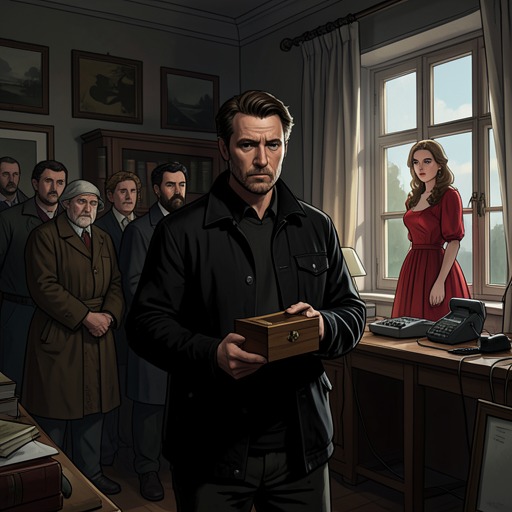
The arrangement eventually turned inward when the Los Angeles Police Department asked Adrian to target one of its own. He resisted at first, Puck later recalled, because killing a police officer lacked the appeal of his usual work. The plan instead used Puck’s arrest on a minor drug-seed charge: Puck would kill Detective Vincent Indelicato, while the arrest would give him a story on the jailhouse grapevine that could enhance his standing in prison. Adrian solicited the killing, and Puck carried it out. The charge against Puck was resolved before trial, so he never went to prison; the episode made the department’s capacity to direct violence and manage its aftermath harder to separate from the crimes themselves.
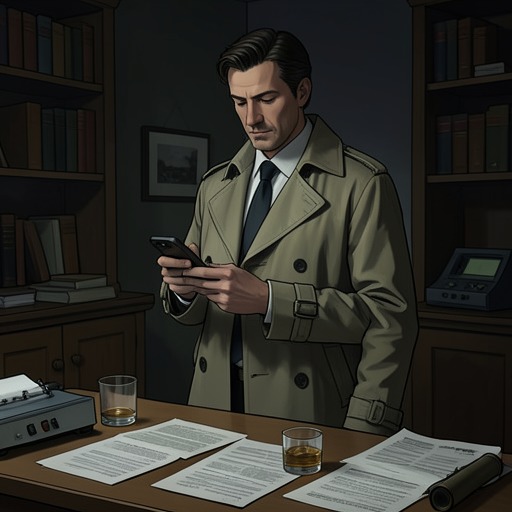
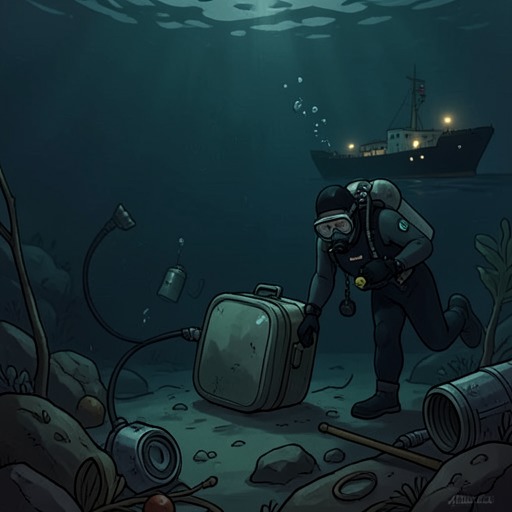
The case file Doc examined showed how Adrian’s protection worked across earlier arrests as well. He was repeatedly detained, questioned, arraigned, or indicted, but the cases did not reach trial: evidence was ruled insufficient, inadmissible, or circumstantial, bodies could not be found, or another person accepted a lesser offense. One such stand-in was Boris Spivey, who, after serving reduced time at San Quentin, went directly to work for Mickey Wolfmann. Doc also found a photograph of Adrian beside an open container of U.S. currency bearing Nixon’s face, linking him to the same counterfeit bills recovered from the sea. These details broaden the pattern around Adrian beyond a single police killing: his apparent impunity intersects with hidden money, other criminal intermediaries, and official systems that repeatedly prevent a case from reaching judgment.
Earlier Ties and the Pattern of Impunity
The records Doc reviews suggest that Adrian’s protection is not limited to the Indelicato affair. His name recurs in arrests and prosecutions that end without a trial, through evidentiary failures, missing bodies, or another person accepting a lesser charge. One such intermediary is Boris Spivey, who served reduced time at San Quentin and then went to work for Mickey Wolfmann. Doc notices that Puck and Boris, both connected to Adrian’s orbit, had also worked for Wolfmann; the pattern raises questions about how Adrian’s network, the police, and Wolfmann’s operation intersect, without establishing that Adrian directed every crime involving those men.
Conflicts Around Puck and Glen
Tariq Khalil’s account of Glen Charlock’s prison history provides a separate view of the violent networks that intersect Adrian’s world. A snitch known as El Huevoncito had made enemies across racial and gang lines. Because the Northern California Nuestra Familia and the southern Sureños could not conveniently act against him, they subcontracted the killing to the Aryan Brotherhood. The Brotherhood was recruiting Glen and required a killing as part of initiation. Glen wanted membership but feared carrying out the act himself, so he looked for a way to arrange it while avoiding both retaliation and the personal consequences of the murder. This account establishes the atmosphere of delegated violence around Glen, not that Adrian arranged the killing.
Years later, Doc considers whether Adrian might have had reason to target Puck after a detective arrested him on a minor drug-seed charge. The arrest could have threatened Adrian’s standing: if one of his former associates were convicted, it might reflect badly on him, much as a borrower’s refusal to repay a loan did. The possibility reframes the charge as a move in a struggle involving both Puck and Adrian, rather than simply an effort to punish Puck. It remains part of Doc’s reconstruction of the case, not proof that Adrian ordered the arrest.
Adrian’s Fall and the Unresolved Larger System
When Doc confronts Adrian after learning that Puck killed Indelicato, sirens approach. Adrian thanks Doc for calling an ambulance, then falls in the street and appears dead. Doc continues walking, aware in theory that he has killed two people and may face prolonged trouble, yet feeling detached from what has happened. Bigfoot Bjornsen pulls up and asks whether Doc is coming with him. Adrian’s apparent death ends his immediate role in the investigation, but it does not resolve who in the police department commissioned the killing or how the arrangement was protected.
Bigfoot later explains that Mickey Wolfmann had stumbled upon something he was not meant to see. Men in disguises took Mickey away, and federal authorities, alarmed by an unusually wealthy man preparing to give his money away, had their own plans for him. Bigfoot says that the government’s connection to the Golden Fang, through heroin-related activity in the Far East, led to Mickey being sent to Ojai for psychological manipulation. This account places Adrian’s case within a broader world where public agencies, private operators, money, and coercive influence overlap, though it does not establish that Adrian himself participated in Mickey’s abduction or treatment.
Adrian’s Fall and the Unresolved Larger System
When Doc confronts Adrian after learning that Puck killed Detective Vincent Indelicato, sirens approach. Adrian thanks Doc for calling an ambulance, falls in the street, and appears dead. Doc keeps walking, aware in theory that he has killed two people and may face months or years of trouble, yet feeling detached from what has happened. Bigfoot Bjornsen pulls up beside him and asks whether he is coming along. Adrian’s apparent death ends his immediate role in the investigation, but leaves unanswered who in the Los Angeles Police Department commissioned the killing and how the arrangement was protected.
Bigfoot later explains that Mickey Wolfmann had stumbled upon something he was not meant to see. Men in disguises took Mickey away; federal authorities, alarmed by an unusually wealthy man preparing to give his money away, had their own plans for him. Bigfoot says the government’s connection to the Golden Fang through heroin-related activity in the Far East led to Mickey being sent to Ojai for psychological manipulation. This account places Adrian’s case amid overlapping public agencies, private operators, money, and coercive influence, but does not establish that Adrian participated in Mickey’s abduction or treatment.
Final Confrontation and Unresolved Power
When Doc confronts Adrian after learning that Puck killed Detective Vincent Indelicato, sirens approach. Adrian thanks Doc for calling an ambulance, falls in the street, and appears dead. Doc continues walking, aware in theory that he may face months or years of trouble, yet detached from what has happened. Bigfoot Bjornsen pulls up beside him and asks whether Doc is coming with him. Adrian’s apparent death ends his immediate role in the investigation, but leaves unanswered who within the Los Angeles Police Department commissioned the killing and how the arrangement was protected.
Bigfoot later explains that Mickey Wolfmann had stumbled upon something he was not meant to see. Men in disguises took Mickey away, and federal authorities, alarmed by a wealthy man preparing to give his money away, had their own plans for him. Bigfoot says that the government’s connection to the Golden Fang through heroin-related activity in the Far East led to Mickey being sent to Ojai for psychological manipulation. This account places Adrian’s case amid overlapping public agencies, private operators, money, and coercive influence; it does not establish that Adrian participated in Mickey’s abduction or treatment.